Pennsylvania is home to a wide variety of wild mammals. Many of the animals people encounter, especially during spring and summer, are young animals that are still receiving care from their mothers. Knowing when to leave them alone and when to seek help can prevent unnecessary rescues.
Important information about rabies vector species: Pennsylvania identifies six wildlife species that require special precautions because of their association with rabies: raccoons, skunks, foxes, coyotes, groundhogs, and bats.
If you find one of these animals, please visit our Rabies Vector Species page for important safety information and species-specific rescue guidance. Do not attempt to handle or capture these animals without professional guidance.
White-tailed Deer
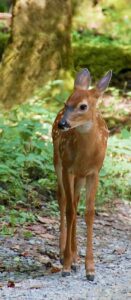
US National Park Service
When to leave them alone: A young fawn lying quietly by itself is usually behaving normally. Mother deer deliberately leave their fawns hidden for long periods while they feed, returning periodically to nurse them.
A fawn may be found in tall grass, beside a building, in a garden, or even in an open area. Its location may seem unusual, but this does not automatically mean it has been abandoned.
Healthy fawns instinctively remain still to avoid attracting predators. As they grow older, they may begin walking and exploring without their mothers constantly nearby.
When they need help: A fawn that is visibly injured, bleeding, covered with fly eggs or maggots, severely weak, or known to have lost its mother needs professional assessment. A fawn that persistently follows people or cries repeatedly may also require evaluation.
Call the PA Game Commission directly if an adult deer has been struck by a vehicle, is unable to stand, is entangled, or has serious injuries requiring assistance.
What to do: Leave healthy fawns exactly where they are and move away. Keep children and pets out of the area so the mother can return.
Do not attempt to feed, capture, transport, or raise a fawn. If you believe a fawn is injured or truly orphaned, contact the Pennsylvania Game Commission or a wildlife rehabilitator authorized to advise on deer.
Never attempt to approach or restrain an injured adult deer. Deer can inflict serious injuries with their hooves, and an injured animal may react unpredictably. Contact the Pennsylvania Game Commission for assistance.
Good to know: White-tailed deer fawns are born with spotted coats that help camouflage them in vegetation. Their mothers spend relatively little time beside them during the first weeks of life, reducing the likelihood that predators will discover their hiding places.
Cottontail Rabbits
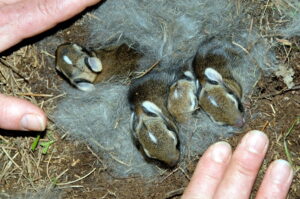
When to leave them alone: Mother rabbits visit their nests only briefly, usually around dawn and dusk, to nurse their young. A nest of baby rabbits without the mother present is normal and does not mean the babies have been abandoned.
Rabbit nests are shallow depressions in the ground, often lined with grass and the mother’s fur. They may be found in lawns, gardens, flower beds, and other seemingly exposed locations.
Young rabbits that are fully furred, have their eyes open, ears upright, and are hopping around independently may already be old enough to survive on their own, even though they appear very small.
When they need help: A rabbit that has been caught by a cat or dog, has visible wounds, is bleeding, appears weak or unresponsive, or has fly eggs or maggots on its body needs professional attention. Babies may also require assistance if their mother is confirmed dead or their nest has been destroyed and cannot be safely restored.
What to do: If you discover an undisturbed nest with healthy babies, leave it alone. Keep pets and children away from the area. If the nest has been accidentally uncovered, the original nesting material can generally be replaced without removing the babies.
If you are concerned that the mother is not returning, contact a wildlife rehabilitator before disturbing the nest. Do not attempt to feed or give water to baby rabbits.
If a rabbit has been injured or caught by a pet, contact a wildlife rehabilitator promptly, even if no wounds are visible.
Cottontail nests cannot be moved.
Good to know: Eastern cottontails develop quickly. Their eyes open at approximately one week of age, and they may leave the nest when they are only three to four weeks old. Their small size frequently leads people to mistake independent juveniles for orphans.
Opossums
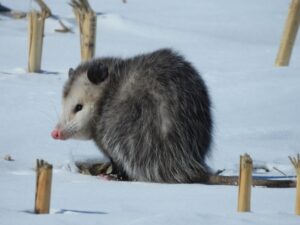
When to leave them alone: Opossums are primarily nocturnal, but they may occasionally be seen during daylight hours. A healthy opossum moving through a yard or searching for food generally does not need assistance.
Young opossums ride on their mother’s back after leaving her pouch. As they grow, they begin exploring independently. A young opossum found alone may need assessment depending on its size and condition.
When they need help: Opossums are frequently injured by vehicles and attacks from domestic animals. An opossum that is bleeding, unable to walk normally, visibly injured, or showing signs of illness needs professional care.
If an adult female opossum is found dead, particularly after being struck by a vehicle, she may still have living babies in her pouch. Young opossums found alone and too small to survive independently also need assistance.
What to do: Do not put yourself in danger by approaching an opossum on an active roadway. If you suspect a deceased female has babies in her pouch, contact a wildlife rehabilitator as soon as possible for instructions.
Do not pull babies from the mother’s nipples. Very young opossums may be firmly attached, and improper removal can cause serious injury.
If you find a small, apparently orphaned opossum, contact a rehabilitator for advice rather than attempting to feed or raise it.
Good to know: The Virginia opossum is North America’s only native marsupial. Its babies are born extremely undeveloped and continue growing inside the mother’s pouch. Opossums are omnivores and consume insects, fruits, carrion, and many other foods.
Squirrels
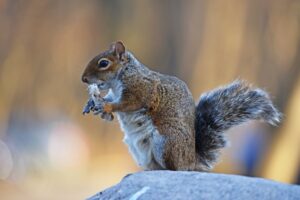
When to leave them alone: Young squirrels may be found on the ground after falling from a nest or when a nesting tree has been disturbed. If the baby is uninjured and its mother is nearby, reunification may be possible.
Mother squirrels frequently retrieve displaced babies and may move their young to another nest when their original nesting site has been damaged.
When they need help: A squirrel that has been caught by a cat or dog, is visibly injured, bleeding, weak, cold, or covered with fly eggs or maggots needs professional attention. Young squirrels also need assistance if their mother is confirmed dead or reunification is unsuccessful.
What to do: If a healthy baby squirrel is found after a tree has been cut down or a nest has fallen, contact a wildlife rehabilitator for guidance on attempting reunification. The baby must be protected from predators and unsafe weather while the situation is assessed.
Keep cats, dogs, and children away from the area. Do not feed the baby or give it water. If the squirrel is injured, cold, or has had contact with a cat or dog, seek professional advice promptly rather than attempting reunification.
Adult squirrels can bite and should not be handled without appropriate guidance.
Good to know: Eastern gray squirrels commonly build leafy nests called dreys high in trees, but they also use tree cavities. Mothers may maintain more than one nest and relocate their babies when threatened or disturbed.
Chipmunks
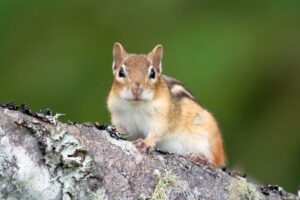
When to leave them alone: Chipmunks are active during daylight hours and are frequently seen gathering food, running through gardens, or entering underground burrows. These are normal behaviors.
Young chipmunks may begin exploring outside their burrows while still developing independence. An alert, active young chipmunk does not necessarily need rescue.
When they need help: A chipmunk that has been caught by a cat or dog, is bleeding, unable to move normally, visibly injured, or showing signs of severe weakness needs professional assistance. Very young chipmunks found outside a destroyed burrow may also need help.
What to do: If an injured chipmunk can be safely contained without direct handling, contact a wildlife rehabilitator for instructions. Do not attempt to grab it with bare hands. Chipmunks can bite when frightened.
If a burrow has been accidentally disturbed and young chipmunks are exposed, keep pets away and contact a rehabilitator for advice before moving them.
Good to know: Eastern chipmunks spend much of their time on or beneath the ground. They store seeds and nuts in underground chambers and carry food in expandable cheek pouches.
Beavers
When to leave them alone: Beavers are commonly active around dusk, dawn, and nighttime. Seeing a beaver swimming, cutting vegetation, or moving along a streambank is normal behavior.
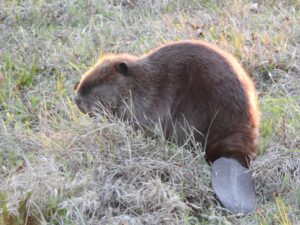
Young beavers, called kits, remain with their family group for an extended period. A kit observed near a lodge or pond is not necessarily orphaned.
When they need help: Beavers may be injured by vehicles, fishing line, traps, or other hazards. A beaver that is bleeding, entangled, unable to move normally, or stranded in a dangerous location may need professional assistance.
What to do: Never attempt to capture or handle a beaver yourself. Beavers are powerful animals with large, sharp incisors and can cause serious injuries when frightened or restrained.
Keep people and pets away and contact WIN or the Pennsylvania Game Commission for guidance. If a beaver is entangled or trapped, do not attempt to free it without trained assistance.
Good to know: Beavers are important ecosystem engineers. By building dams and creating wetlands, they provide habitat for fish, amphibians, birds, and many other species. Beaver families often include the parents and young from more than one breeding season.
Need Help With a Wild Mammal?
If you have found a mammal that appears injured, sick, or genuinely orphaned, contact Wildlife in Need Emergency Response of Pennsylvania (WIN) at 814-414-4224, between 8 a.m. and 6 p.m., most days.
Keep people and pets away from the animal and follow the instructions of a wildlife professional ⓘ
. Do not offer food, water, or medication.
For general information about recognizing wildlife emergencies and safely assisting injured animals, visit our Wildlife Rescue Guidelines page.