Birds of prey include eagles, hawks, falcons, owls, and vultures. These birds play important roles in Pennsylvania’s ecosystems, but they can be seriously injured by vehicles, window collisions, fishing tackle, lead poisoning, and other hazards.
Never attempt to capture a bird of prey without guidance from a trained wildlife responder. Talons and beaks can cause serious injuries, even when a bird appears weak or unable to fly.
If you find a bird of prey that may need assistance, keep children and pets away, observe from a safe distance, and contact WIN or a wildlife rehabilitator. For general emergency instructions, see our Wildlife Rescue Guidelines.
Bald Eagles
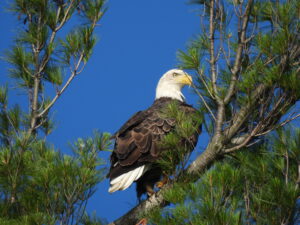 When they need help: An eagle that cannot fly, is struggling to stand, has a drooping wing, has been struck by a vehicle, or appears unusually weak needs professional assessment. Eagles may also suffer from lead poisoning after consuming contaminated prey or scavenged remains.
What to do: Do not approach or attempt to capture an eagle. Keep people and pets away and contact a wildlife professional ⓘ for assistance. Note the bird’s exact location and whether it is moving.
Good to know: Bald eagles have made a remarkable recovery in Pennsylvania following decades of population decline associated with pesticides such as DDT. They commonly nest near rivers, lakes, and other waterways. Young eagles do not develop their familiar white heads and tails until they are approximately four to five years old.
Hawks and Falcons
When to leave them alone: Young hawks and falcons learning to fly may spend time perched on low branches, rooftops, or the ground while their parents continue to care for them. A healthy, alert fledgling is not necessarily in trouble.
Hawks sometimes spread their wings over prey in a behavior called mantling. A hawk crouched over food may appear injured when it is actually protecting its meal.
When they need help: A bird that has struck a window or vehicle, is dragging a wing, cannot stand or fly normally, has an apparent head injury, or is trapped inside a building may require rescue. Young birds displaced by the destruction of a nest or nesting cavity may also need assistance.
What to do: Keep the area quiet and contact a trained wildlife responder. Do not attempt to grab the bird or encourage it to fly. A bird that has suffered a collision may have serious injuries even if it appears alert.
If a hawk or falcon is trapped inside a building or chimney, do not attempt a dangerous capture. Keep the area secure and contact a wildlife professional ⓘ for guidance. Never light a fire when a bird may be inside a chimney.
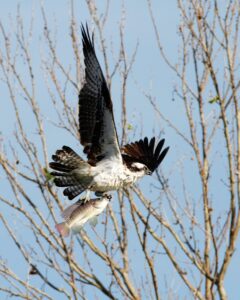
Good to know: Hawks and falcons are skilled hunters, but their hunting methods differ. Hawks generally rely on powerful feet and talons, while falcons are known for their speed and aerial pursuit of prey. American kestrels, Pennsylvania’s smallest falcons, often nest in cavities, including openings in buildings.
Owls
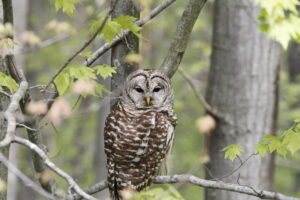
When to leave them alone: Young owls may leave their nests before they can fly well. These fledglings, sometimes called branchers, may be found on low branches, perches, or even the ground. Their parents may still be feeding and protecting them.
An alert young owl without visible injuries should not automatically be considered orphaned. Keep people and pets away and contact a wildlife rehabilitator for advice if you are uncertain.
When they need help: Owls injured by vehicles, caught in chimneys or buildings, entangled in materials, or suffering from visible wounds need professional assistance. An owl with porcupine quills, an injured wing, or difficulty standing should also be evaluated.
Young owls displaced when a nesting tree or cavity is destroyed may need to be reunited with their parents or taken into care, depending on the circumstances.
What to do: Do not attempt to handle an owl. Its talons are powerful, and even a small owl can inflict serious injuries. Keep the area quiet, prevent pets from approaching, and call a wildlife professional ⓘ for assistance.
If an owl is trapped in a chimney, do not light a fire. Contact a trained responder for safe removal.
Good to know: Owls have exceptional hearing and specialized feathers that help many species fly quietly. Most hunt small mammals, birds, or insects. Some nest in tree cavities, while others use abandoned nests or sheltered locations.
Turkey or Black Vultures
When to leave them alone: Vultures are often seen standing beside roads, feeding on carcasses, or spreading their wings while perched. These are normal behaviors and do not necessarily indicate illness or injury.
When they need help: Vehicle collisions are a common hazard because vultures frequently feed on roadkill. A vulture that cannot fly, has an injured wing or leg, appears disoriented, or remains in immediate danger from traffic may need professional assistance.
What to do: Do not approach a vulture on an active roadway or put yourself in danger attempting a rescue. Contact a wildlife professional ⓘ
and provide the exact location.
Vultures may regurgitate partially digested food as a defense when frightened. They also have strong, sharp beaks. Avoid handling them without professional guidance.
Good to know: Vultures are among nature’s most effective cleanup crews. Their excellent sense of smell helps them locate carrion, and their digestive systems allow them to consume material that would be hazardous to many other animals.
Unlike hawks and eagles, vultures do not have feet adapted for grasping and killing live prey. They primarily feed on animals that are already dead.
Need Help With a Bird of Prey?
Wildlife in Need Emergency Response of Pennsylvania (WIN)
Phone: 814-414-4224
8 a.m. to 6 p.m., most days
For general guidance about injured or orphaned wildlife, see our Wildlife Rescue Guidelines.
Keep a safe distance, note the bird’s exact location, and follow the responder’s instructions. Do not offer food or water.